
Solar, delivered
end to end.
Six renewable energy systems and six technical services — covering everything from the first load calculation to the preventive maintenance visit two years after switch-on.
Grid-tie solar systems
The most direct route to a lower electricity bill. Your array supplies the building first and the utility covers the balance — no batteries, fewer components, the shortest payback of the three configurations.
- Sized against your measured daytime consumption, not a package tier
- String layout and inverter selection confirmed by solar PV simulation
- Full AC/DC protection, grounding and lightning protection as standard
- Commonly specified as a mixed hybrid and grid-tie array on commercial sites
Best for: offices, warehouses and homes with a stable supply and heavy daytime load.

Hybrid solar systems
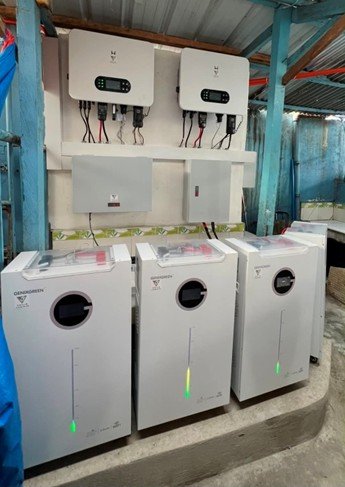
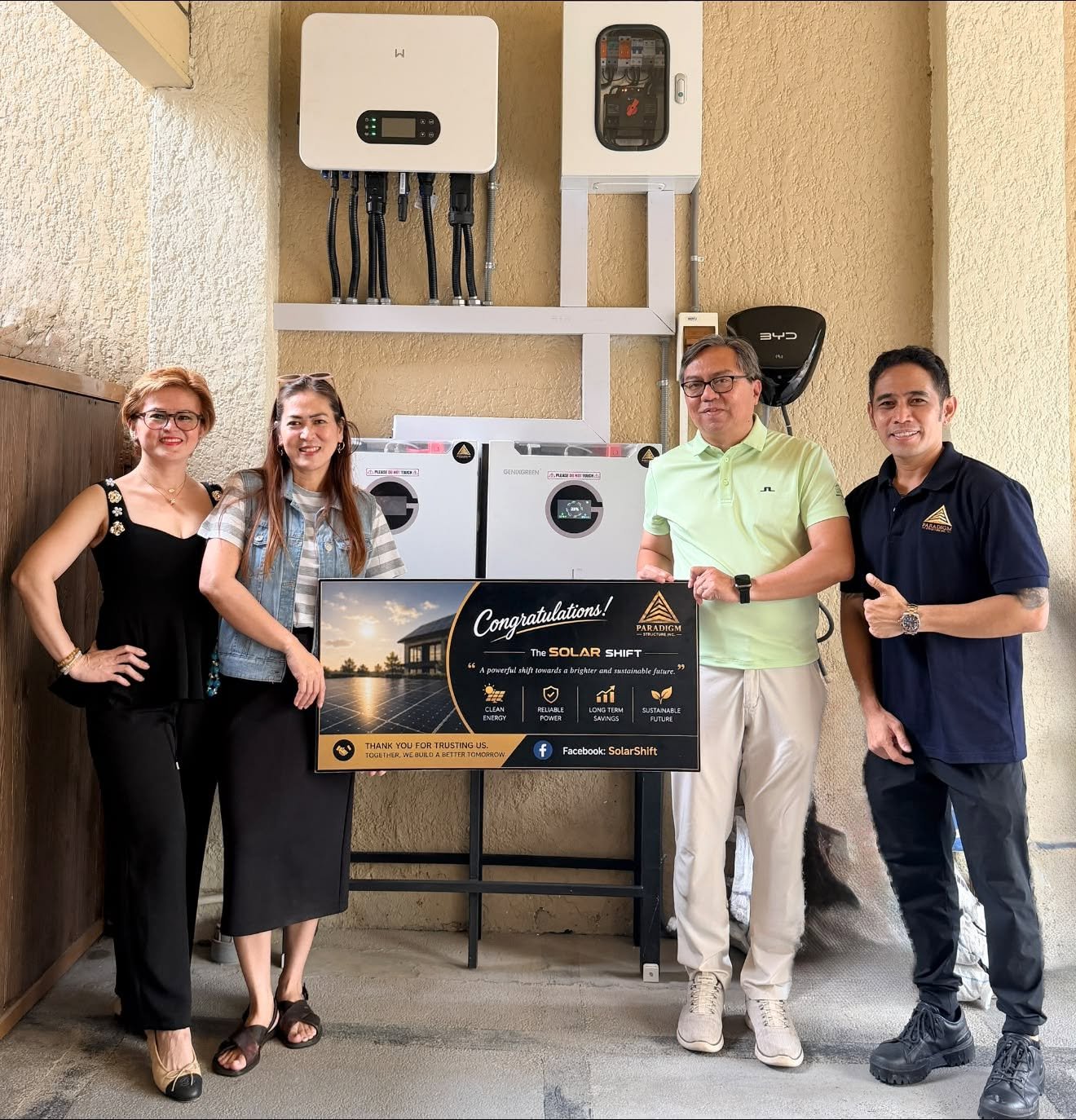
Solar plus storage — and the configuration behind most of the projects we have turned over. You save during the day, and when the line drops the building simply keeps running.
- Hybrid inverter configuration matched to your critical load list
- Automatic changeover — refrigeration, servers and lighting stay up
- Battery bank sized from real consumption data, expandable later
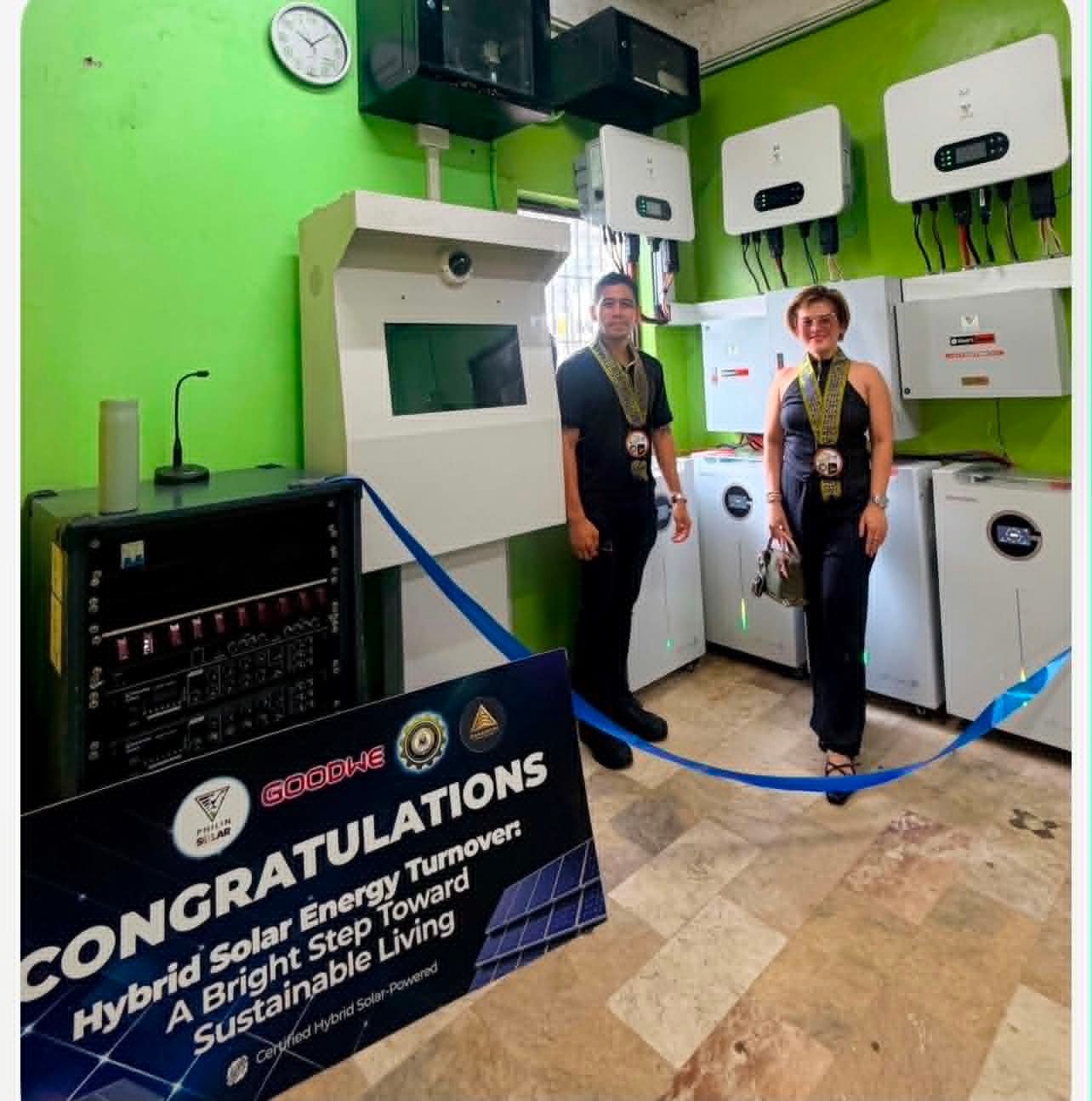
- Delivered at every scale we work at, from 12 kW homes to 68 kW public buildings
Best for: businesses that lose money per hour of downtime, and households tired of candles.
Off-grid solar systems
For sites where the grid is unreliable, uneconomic or simply absent. We design for the worst week of the year rather than the best day, then prove it before handover.
- Autonomy modelled against the site’s real load and irradiance profile
- Generator integration and load shedding for extended overcast periods
- Corrosion-conscious specification for coastal and island installations
- Complete system testing and commissioning before we leave site
Best for: farms, remote facilities and island properties running on fuel today.
Storage, solar farms and EV charging.
Battery energy storage (BESS)
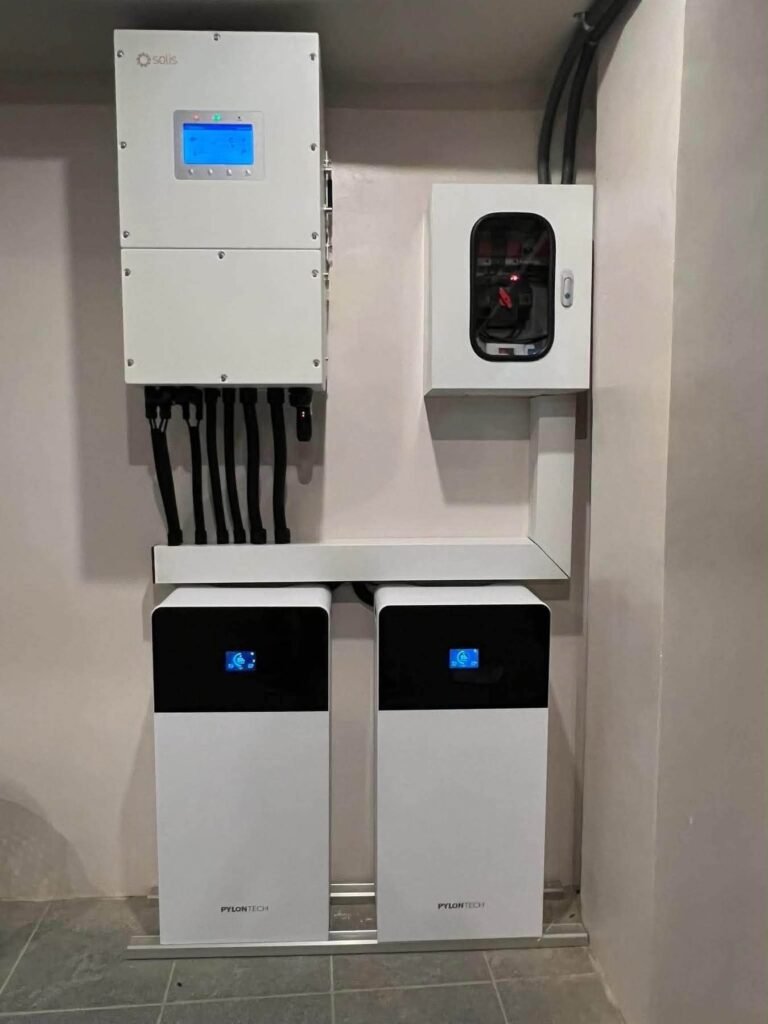
Storage sized to your critical loads and configured, wired and tested before commissioning. We have delivered banks from 16 kWh in a private residence up to 64 kWh backing a barangay hall and police station.
Solar farm support
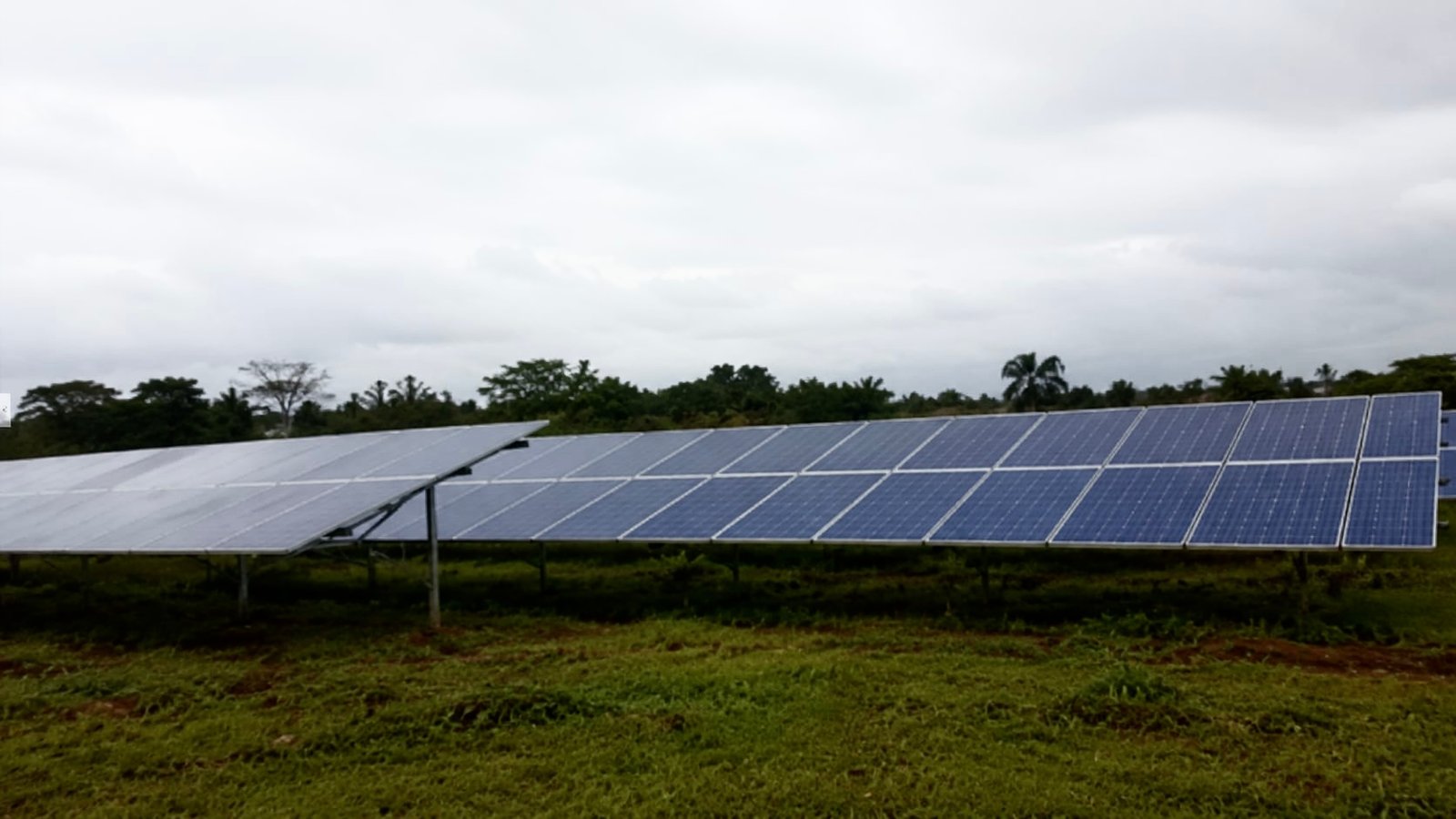
Installation and commissioning support for larger ground-mount developments — bringing construction-side project management to renewable energy at scale.
EV charging infrastructure
Charging points built into your electrical distribution with the protection and capacity headroom they need — and, where it fits, fed from your own array.
The work that happens before the scaffolding.
Available as part of a full installation, or standalone if you are working with another contractor and want the numbers checked.
Site inspection
Roof condition, orientation, shading, access and existing electrical infrastructure assessed on site — not from a satellite photo.
Load analysis
Consumption and demand profiling that establishes what you actually use, when you use it, and what genuinely needs backing up.
Electrical design coordination
DC and AC layouts, protection coordination, grounding and lightning protection — documented by our technicians and signed off by a licensed engineer where required.
Structural design coordination
Roof and frame capacity checked against the array’s mass and wind loading, then confirmed with the structural side of Paradigm Structure Inc.
Solar PV simulation
Modelled yield for the specific layout on your specific roof, so the savings projection is defensible rather than optimistic.
Preventive maintenance
Scheduled inspection and cleaning, battery health checks and system monitoring assistance — on our systems and on inherited ones.
Our responsibility does not end at turnover.
A solar system is a twenty-year asset. It should be supported like one.
- Technical support from the team that built the system
- Preventive maintenance on a scheduled cycle
- System monitoring assistance
- Warranty coordination with manufacturers and suppliers
- Troubleshooting services when something needs attention
- Complete project documentation kept on file
What clients ask before they commit.
Not with a pure grid-tie system — it disconnects automatically for the safety of utility linemen. If outage protection matters to you, you need a hybrid or off-grid set-up with battery storage, where the changeover is automatic and fast enough that refrigeration and computers never restart.
Most of the systems we turn over in Cebu are hybrid for exactly this reason.
Load analysis first. We profile what you actually consume and when, inspect the site for roof capacity, orientation and shading, then run a solar PV simulation on the proposed layout. The array is sized against measured consumption and the battery against your critical load list — not against a package tier.
Cost depends on system size, configuration, roof type, distance from the array to the panel board and whether your service is single or three-phase. Because those vary widely, we quote after a site inspection rather than publishing a package price — and every quote is itemised so you can see what each component contributes.
Send us a recent electricity bill and we will come back with an indicative figure.
It depends on scale. A residential hybrid system is a matter of days on site; a 68 kW public building with battery backup is a longer programme. What does not change is the sequence: assessment, procurement, installation, testing and commissioning, then documented turnover.
Yes. Technical support, preventive maintenance, system monitoring assistance, warranty coordination and troubleshooting are part of how we work, not an upsell. Complete project documentation is handed over with the system.
Yes — we take on inherited systems after a one-time inspection and load check, and we also provide standalone technical services if you want a third-party design reviewed before you commit to it.
We are based in Cebu, with completed projects in Cebu City, Mandaue and Minglanilla, and capability across the wider Visayas. For sites further out, mobilisation is quoted transparently and separately.
Start with the numbers, not the sales pitch.
Send a recent electricity bill and tell us what you want the system to do. We will tell you what it takes to get there — honestly, and in writing.